If You Leave for Two Weeks, What Stops Working?
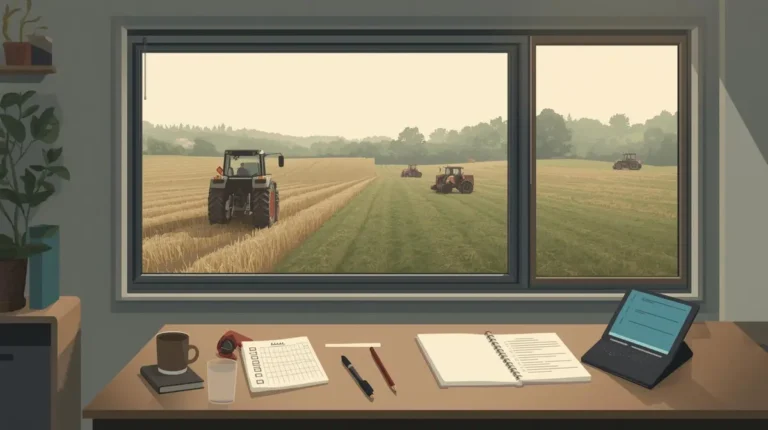
You plan a break. Two weeks. First time in three years.
Daily work is covered. Family knows the routine. Hired help has a schedule.
Everything should run.
Day four. The first text arrives: “Should we do this now or wait for you?“
Day seven. Three more questions are waiting.
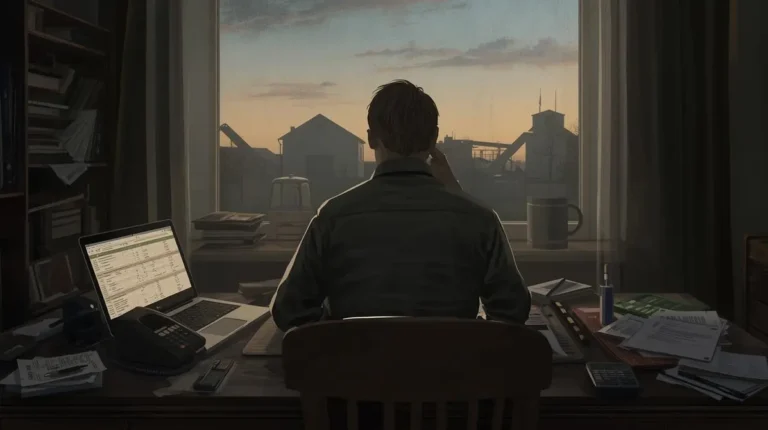
Day ten. You realize: the farm did not stop. But decisions did.
That is not a people problem. It is a structural problem.
Absence is not a lifestyle topic. It is an operational test.
Illness, injury, family issues, training, or seasonal overload all create moments when the main decision-maker is not fully present.
The question is not whether this will happen. The question is what stops working when it does.
What absence reveals
Most farms keep running when the owner steps away.
Animals are fed. Fields are worked. Routines continue.
The problems show up elsewhere.
Decisions slow down. Small issues wait. People hesitate.
Work happens, but adjustment does not.
That gap is where risk accumulates.
What stops first
Across many small and mid-scale farms, the same points fail early.
Decisions freeze
People wait for confirmation.
Input choices get delayed. Small changes pile up until they become real problems.
No one wants to make the wrong call, so no one makes any call.
Exceptions break the routine
Routine tasks work. Anything outside the usual pattern does not.
Weather changes. Deliveries shift. Machinery behaves differently.
Without clear decision paths, work pauses or moves in the wrong direction.
Responsibility blurs
Everyone does their part. No one owns the outcome.
That is not a people issue. It is a design issue.
Two moments that repeat
A mixed farm plans a short break after harvest.
Daily work is covered. Family and hired help know their tasks.
Day nine. The irrigation pump starts acting up. Not broken. Just inconsistent.
One person calls the other. “Should we call the repair guy or wait?”
“I do not know. Better wait.”
Three days later, you return. The field is fine. But irrigation timing is off. And now you are catching up instead of planning ahead.
Nothing dramatic happened. The structure simply could not handle a decision without the central person.
A 40-hive apiary where only the owner knows which colonies are queenless, which need splits, and when to add supers.
Two weeks away in May.
Work continues. Hives get checked. Feeding happens.
But adjustments do not. The beekeeper covering the operation follows the schedule. They do not change it.
The season does not wait. And by the time you return, the window for splits has closed.
These are not failures of effort. They are failures of design.
Why is this a structural problem
Most farms do not fail because people are unreliable.
They fail because decisions are too concentrated.
When one person holds operational knowledge, authority to decide, and responsibility for outcomes, absence creates a bottleneck.
The farm becomes efficient only as long as that person is present.
That works until it does not.
Also, have you ever asked yourself what breaks first when subsidies are delayed or reduced?
Necessary presence vs dependence
Every farm needs leadership.
That does not mean every decision should depend on one person.
Healthy operations separate routine execution, exception handling, and final responsibility.
When all three sit in one place, risk increases.
Not because of ego or control. Because no system can scale attention without breaking.
Size does not solve this
Small farms assume this is a large-farm problem.
It is not.
Smaller operations often depend more heavily on one person.
Larger farms sometimes handle absence better because they are forced to.
The issue is not scale. It is design.
What makes sense to do
Start with clarity, not delegation.
Know which decisions must move even when you are not there.
A practical example: A vegetable farm keeps a simple decision log.
Not a manual. Just a one-page list: when to water, when to harvest, who to call if equipment fails, which supplier to use if stock runs low.
During a two-week absence, the person covering the farm knows exactly where to look. No guessing. No waiting.
The document takes two hours to write. It prevents days of delays.
Other practical steps:
- separate routine from judgment
- make one person responsible for outcomes in your absence, not everyone responsible for tasks
- test the system with a short absence before a long one
This does not require new systems. It requires deciding what cannot wait.
What does not make sense yet
Adding complexity.
New tools. Formal management layers.
If the structure is unclear, more systems only hide the problem.
What decision is actually on the table
So what?
Absence shows whether the farm works as a system or as an extension of one person.
When?
If stepping away creates tension or silent delays, the issue exists now.
How much?
Time: A few hours mapping decisions and responsibilities
Money: Minimal
Energy: Lower long-term pressure and fewer hidden failures
Being needed feels productive. Being replaceable is safer.
A farm that slows down without its owner is fragile.
A farm that keeps deciding is resilient.
Absence does not cause the problem. It reveals it.
Which path will you choose?