Smart Farming Problems: Is Technology Making Work Easier or Harder?
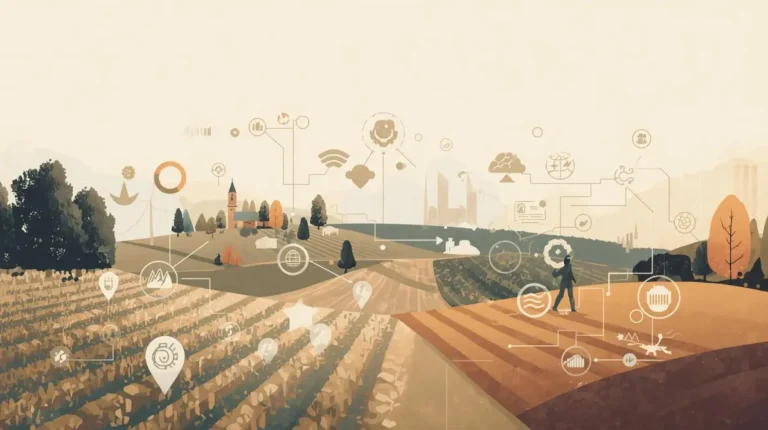
Media coverage of “tech-dense” farms and apiaries is increasing. Automation, sensors, data systems. The narrative positions these as the logical future of farming and beekeeping. Advisors, suppliers, and grant programs echo this direction. The message is consistent: higher technological complexity equals modernization.
For farms and apiaries operating at 20–50 hectares or 50+ hives with one or two decision-makers, this creates a specific pressure. Not adopting technology starts to feel like falling behind. Staying simpler starts to look like a choice that needs defending.
The assumption has shifted. Nobody asks if the technology works. They ask why you haven’t adopted it yet.
What’s Actually Changing With New Technology in Farm Work
Ten years ago, technology was an optional enhancement. Now it’s positioned as the expected baseline. This shows up in three places:
Grant applications increasingly favor projects with digital components. Not as a requirement, but as a scoring advantage. Supplier conversations shift from “do you want sensors” to “which sensor system fits your operation.” Advisory services frame decisions around tech adoption timelines, not whether to adopt at all.
For a 35-hectare mixed farm planning a €25,000 investment over the next 18 months, the question used to be: what equipment do we need?
Now there are questions nobody asks out loud: Does this need daily checking? Monthly maintenance? What happens when sensors fail? Who handles the service calls? What subscriptions auto-renew?
Same for a 100-hive operation, considering hive expansion. How many hives? That’s one question. What monitoring infrastructure comes with scaling up? That’s the second question, and it costs more than the hives themselves.
How Much Complexity Can You Carry
Every farm and apiary already uses some technology. Tractors are technology. Spreadsheets are technology. The question is: how much system complexity can this operation carry without fragmenting decision capacity?
Adding technology adds:
- Points where things can fail
- Dependencies on external service
- Invisible work (updates, monitoring, troubleshooting)
- Attention that doesn’t produce anything directly
You’re choosing between complexity and stability, not between modern and outdated.
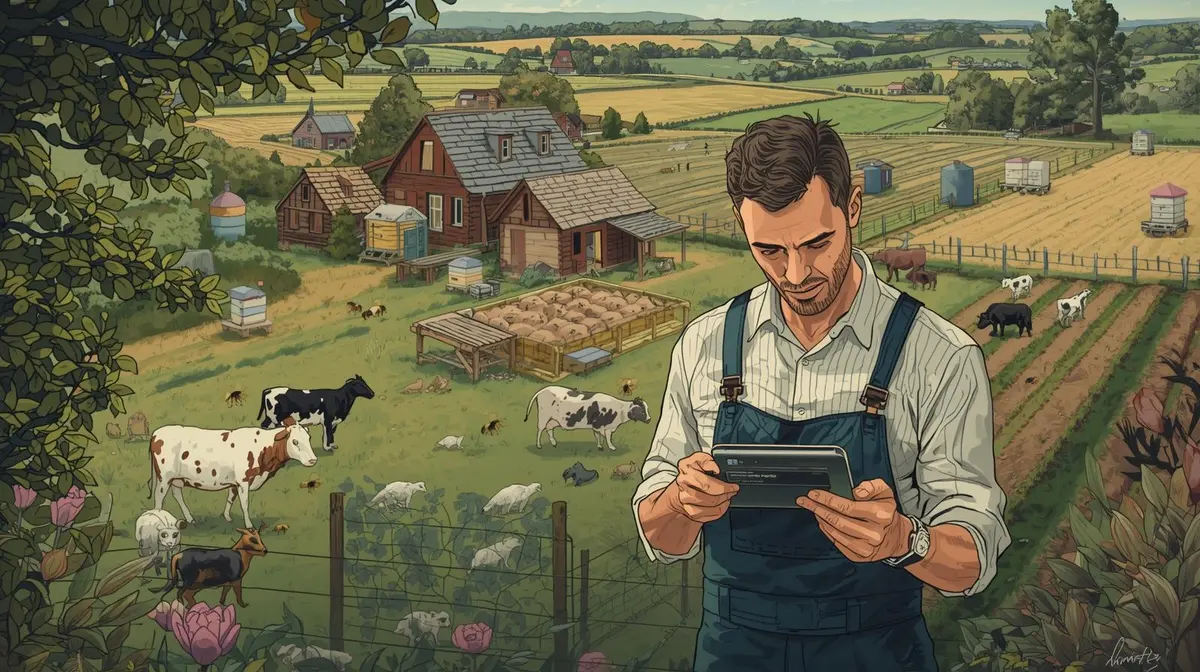
A 40-hectare dairy operation in southern Germany. Two people. The existing milking system works. Supplier suggests “smart monitoring” upgrade. Sensors track individual cow health metrics. Data dashboard. Predictive alerts.
The upgrade adds:
- Daily dashboard checks (10 minutes)
- Weekly data review to catch anomalies (30 minutes)
- Monthly software updates (time varies, sometimes requires a restart during milking)
- Service calls when sensors malfunction (happened three times in the first year)
- Subscription cost (€180 monthly)
Total time cost: roughly 4–5 hours monthly, which didn’t exist before. Not production work. System maintenance work.
The farm already operated at 60 hours weekly per person. Adding 5 hours monthly sounds small. But those hours land unpredictably. Update notification during calving. Sensor malfunction during harvest prep. Dashboard alert that turns out to be a false positive, but required 45 minutes to verify.
Similar pattern in apiary operations. A 120-hive operation in EU. A beekeeper considers a hive monitoring system. Weight sensors, temperature tracking, and humidity alerts. Promised benefit: early swarm detection, reduced inspection frequency.
Reality after eight months:
- False alerts requiring yard visits (6 in first season)
- Sensor battery replacements (every 10–12 weeks per hive, 15 minutes per visit)
- Data interpretation time (20 minutes weekly to distinguish normal variation from actual problems)
Then came December. Temperature alert: sudden drop in three hives. The beekeeper drove 40km through the snow at 7 am. Arrived to find hives fine. Sensor calibration had drifted.
Three hours lost. €10 in fuel. A winter morning that could have been spent on planned maintenance or something else.
The monitoring didn’t replace inspections. It added a layer between the beekeeper and the colony. Instead of reducing visits, it created new reasons to visit – often at the wrong time, for the wrong reasons.
The system now sits unused. Batteries removed. Back to scheduled inspections and direct assessment.
Complexity doesn’t arrive on schedule. It arrives when you’re already occupied.
After 14 months, the farm disabled the monitoring system. Sensors still installed. Subscription canceled.
Actually, that’s not quite right.
Fourteen months in, the subscription auto-renewed. €180 charged. They’d forgotten to cancel because they’d stopped checking the dashboard three months earlier. The sensors were still running. Nobody was watching. It took another invoice before they remembered to call and cancel.
Total wasted: €540 for a system nobody used for a quarter of the year.
The operation couldn’t carry the additional attention load without everything else becoming more fragmented.
What Passes, What Fails
Technology makes sense when it removes recurring work without creating new attention demands.
Automated gates pass the filter because when they fail, you walk. Annoying, but you revert to manual operation. Weather stations with simple alerts pass because when they fail, you look at the sky. The backup is built into your existing knowledge.
Both failures are inconvenient, not critical. The operation continues.
Systems that don’t pass:
- Anything requiring daily data interpretation to function
- Tools that only work when you’re actively managing them
- Solutions sold as “time-saving” but measured in efficiency percentages, not returned hours
- Technology that makes core operations dependent on subscription renewal
Decision threshold: if the system stops working for two weeks, does your operation stop or continue with minor inconvenience?
If the operation stops, you’ve created a dependency. If it continues, you’ve added a tool.
The difference matters most when the invoice arrives, and nobody remembers the last time they used what they’re paying for.
When to Add Farm Technology, When to Refuse
Add technology when it clearly removes a specific bottleneck and the failure mode is acceptable.
A bottleneck: something you do repeatedly that consumes identifiable hours and doesn’t require judgment. Acceptable failure mode: if the technology breaks, you can revert to a manual process without an operational crisis.
Refuse technology when:
- The benefit is described in percentages or efficiency gains without specific hour counts
- The sales pitch emphasizes “keeping up” or “future-proofing”
- Implementation requires ongoing attention you don’t currently have available
- The system creates new expertise requirements (data analysis, software management, troubleshooting)
For operations running at 55–65 hours weekly with limited spare capacity, technological complexity is a liability unless it demonstrably returns more hours than it consumes.
Perception matters in some contexts. If you sell honey directly to consumers who value “modern beekeeping,” visible technology might influence purchasing decisions. If you’re targeting grant programs that score digital integration, the calculation changes.
But for core operational stability, the filter stays simple: does this reduce fragmentation or increase it?
Year Three: Still Using It or Still Paying For It
Managed complexity versus complexity that manages you.
For most 20–50 hectare operations or 50–150 hive apiaries with 1–2 decision-makers: technology that requires 2+ hours monthly maintenance without removing 5+ hours of recurring work is complexity you’re adding to your own load.
That subscription auto-renews. That sensor needs batteries. That dashboard expects daily attention.
The tech pressure from media and industry will continue pushing toward higher and smart tech density.
You can interpret that pressure as instruction, or you can filter it out while running a stable operation.
The real test isn’t year one, when the system is new, and you’re paying attention. The real test is year three, when the novelty is gon,e and the system is just another thing that needs checking.
If you’re still using it, it passed the filter. If you’re still paying for it but stopped checking three months ago, it didn’t.